


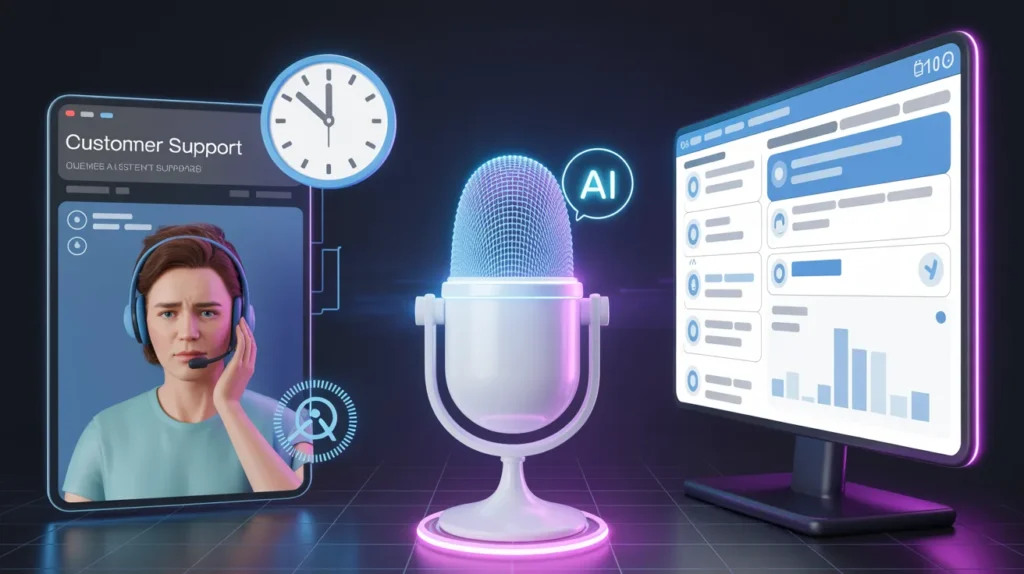
Introduction to AI Voice Assistants
AI voice assistants represent a transformative advancement in the realm of customer support, enhancing the interaction between businesses and their clients. These intelligent systems utilize voice recognition technology to understand and respond to user queries, thereby streamlining communication and improving user experience. From smart devices to web interfaces, AI voice assistants are increasingly integrated across various platforms, employing voice AI for businesses to facilitate automated communication.
The evolution of AI technologies has resulted in the development of sophisticated virtual voice assistants capable of managing customer related tasks with remarkable efficiency. These AI-powered customer service tools are designed to address customer inquiries, provide information, and even handle transactions, significantly reducing wait times and increasing user satisfaction. Specifically, organizations have adopted AI call center software equipped with voice chatbot technology to enable seamless interaction without the need for human intervention in routine tasks.
By leveraging machine learning and natural language processing, voice AI allows these digital assistants to understand context and sentiment, thereby offering personalized responses. This adaptability is crucial in an era where customer expectations are continuously evolving. Businesses are integrating smart voice support systems to ensure that customer support is available around the clock. Notably, AI voice bots for websites enhance online browsing experience by enabling hands-free navigation and instant assistance.
As we delve deeper into the capabilities of these technologies, it becomes clear how crucial AI voice assistants are for modern businesses. They not only improve operational efficiency but also provide the foundation for advanced automated customer service strategies, particularly beneficial in high-volume environments. Understanding their functionality and impact is essential for businesses aiming to enhance customer engagement and satisfaction.
The Rise of AI in Customer Support
As online businesses continue to grow, the demand for efficient and effective customer support solutions has led to the rise of artificial intelligence (AI) in this sector. Traditional methods of customer support, which often relied heavily on human agents, are now being eclipsed by innovative AI-driven solutions that include AI voice assistants and chatbots. These advancements have transformed how companies interact with their customers, making services more accessible and responsive.
Statistics highlight this significant shift towards automated customer service. Recent studies show that 72% of consumers prefer interacting with a voice AI for businesses over traditional support channels due to the immediacy they offer. Furthermore, 60% of businesses employing AI customer support tools have reported a marked improvement in customer satisfaction ratings. This trend is indicative of a broader acceptance of AI in everyday business operations.
Numerous organizations have successfully integrated smart voice support systems to streamline their customer service processes. For example, a well-known retail chain implemented AI call center software that processes incoming customer queries via voice chatbot technology. As a result, they were able to reduce average handling times by 40%, allowing human agents to focus on more complex issues.
The versatility of virtual voice assistants is evident, as they can be deployed across various platforms, enhancing customer engagement on websites and mobile applications. Moreover, companies are increasingly investing in AI voice bots for websites to facilitate 24/7 customer interactions, ensuring that support is always available when needed. This adaptation not only improves operational efficiency but also ensures that customers receive timely assistance.
In sum, the integration of AI into customer support represents a significant evolution in how businesses interact with their customers. By adopting AI-powered customer service solutions, organizations can enhance their service offerings while fostering customer loyalty and satisfaction.
Benefits of AI Voice Assistants in Customer Support
The integration of AI voice assistants into customer support frameworks represents a significant advancement in how businesses interact with their customers. One of the primary benefits is the substantial improvement in response times. Traditional customer support systems often leave users in long queues, causing frustration and delays. In contrast, virtual voice assistants provide immediate responses to inquiries, facilitating quicker resolutions for users seeking assistance.
Moreover, the efficiency of AI customer support tools cannot be overstated. These tools, powered by voice AI for businesses, can handle multiple inquiries simultaneously. This functionality is particularly advantageous during peak hours or during promotional events when customer queries may surge. The ability to operate around the clock ensures that customers can receive help at any time, a critical feature for online businesses striving for exceptional service.
Cost-effectiveness is another predominant advantage of employing AI-powered customer service solutions. By utilizing AI call center software or voice chatbot technology, businesses can significantly reduce operational costs linked to hiring and training human staff. As these solutions streamline processes, resources can be reallocated to other areas of business, contributing to overall growth and innovation.
Finally, the implementation of smart voice support systems tends to enhance customer satisfaction, which is crucial for customer retention. Users interacting with AI voice bots for websites often experience personalized assistance tailored to their specific needs. This level of customized interaction can lead to longer-lasting customer relationships and increased loyalty, ultimately benefiting the business’s reputation and revenue.
Understanding Customer Needs through AI Voice Assistants
AI voice assistants have emerged as transformative tools in understanding and addressing customer needs in various online businesses. By leveraging advanced voice AI for businesses, these technologies facilitate a more efficient and personalized interaction between customers and service providers. One of the pivotal strengths of AI customer support tools lies in their capability to analyze extensive data sets. This analysis includes understanding customer inquiries, preferences, and behaviors, allowing businesses to cater to their clientele more effectively.
The implementation of virtual voice assistants enables companies to gather insights from customer interactions. These tools can recognize patterns in voice and text input, identifying common issues or queries faced by users. By analyzing this data, businesses can refine their services or products, thereby enhancing customer satisfaction. Additionally, through machine learning, automated customer service systems continuously evolve and improve, offering users an ever-more tailored support experience.
Moreover, AI call center software contributes significantly to optimizing customer interactions. It effectively routes calls and requests to the appropriate departments, drastically reducing wait times and improving overall efficiency. This ensures that customers receive timely assistance, which is a critical aspect of effective customer service.
The fusion of voice chatbot technology and human-like interaction transforms the customer experience. Customers increasingly prefer automated support due to its availability and responsiveness. This trend emphasizes the importance of AI-powered customer service in meeting modern consumer expectations. By employing smart voice support systems, businesses can effectively engage with their customers and provide relevant solutions, contributing to lasting customer loyalty.
Challenges and Limitations of AI Voice Assistants
While AI voice assistants have the potential to significantly enhance customer support for online businesses, there are various challenges and limitations associated with their implementation. One of the primary concerns is miscommunication. Although voice AI for businesses has advanced considerably, nuances in human speech and context can lead to misunderstandings. Customers may find themselves frustrated when their questions are misinterpreted by AI-powered customer service tools, potentially damaging the user experience and brand reputation.
Another issue is the reliance on technology. As companies implement automated customer service solutions such as virtual voice assistants and AI call center software, they run the risk of becoming overly dependent on these tools. This dependency can inhibit the personal touch that human agents provide, which is crucial in resolving complex or sensitive issues. Customers often prefer to speak to a live representative who can empathize with their situation, indicating that a balance between technology and human interaction is essential.
Moreover, the need for human oversight remains a critical factor. Although advanced voice chatbot technology can handle repetitive inquiries efficiently, businesses must ensure that there is a system in place for transitioning to human agents when necessary. In scenarios involving intricate problems, the lack of human intervention can lead to prolonged resolution times and decreased customer satisfaction. This highlights the importance of integrating AI voice bots for websites with a strong contingency plan, allowing for seamless handoffs between AI solutions and human support teams.
To maximize the effectiveness of smart voice support systems, organizations must address these challenges and carefully consider how to implement AI voice assistants in a manner that complements human capabilities, rather than replacing them altogether.
Case Studies: Effective Use of AI Voice Assistants
As businesses increasingly adopt AI voice assistants for enhancing customer interactions, several case studies illuminate their significant impact. One exemplary case is a retail company that implemented voice AI for businesses as part of its customer support strategy. Faced with high call volumes and long wait times, the firm sought a solution that would streamline its customer service operations. By deploying AI-powered customer service technology, they introduced a smart voice support system capable of handling routine inquiries.
The transition was robust; their AI call center software handled approximately 70% of incoming queries automatically. This integration not only reduced wait times from over five minutes to under one but also improved customer satisfaction ratings significantly. Post-implementation surveys indicated a 30% increase in customer happiness, with many noting the efficiency and accuracy provided by the virtual voice assistants.
Another notable instance is a travel agency that utilized voice chatbot technology during peak seasons. Anticipating a surge in customer inquiries regarding bookings and cancellations, they opted for automated customer service solutions. The agency’s AI voice bots for websites could respond to frequently asked questions and assist users in making reservations, effectively reducing the workload on human agents.
The results were promising; they recorded a 50% reduction in call center inquiries, allowing their human agents to focus on complex issues that required personalized support. The agency’s overall customer interaction times decreased remarkably, leading to higher conversions and retention rates. Through these examples, it is evident that businesses can achieve operational efficiency and enhanced customer experiences by embracing AI customer support tools in their strategies.
Future of Customer Support with AI Voice Assistants
The evolution of AI voice assistants is commencing a transformative journey in customer support. As technology develops, we are likely to witness further enhancements in voice AI for businesses, particularly in automating customer service processes. These advancements will empower virtual voice assistants to manage a broader range of customer queries, thereby significantly reducing wait times and increasing overall customer satisfaction.
Looking ahead, the integration of AI customer support tools with machine learning algorithms will allow voice chatbot technology to analyze patterns from customer interactions. This capability not only personalizes responses but also increases the chances of resolving issues on the first contact. Organizations can expect smarter voice support systems that can effectively handle complex inquiries, paving the way for AI-powered customer service interfaces that feel intuitive and relatable.
Moreover, AI call center software will evolve to incorporate advanced natural language processing (NLP), enabling these AI voice bots for websites to converse more naturally. Businesses should prepare for this shift by investing in training their staff to work alongside these technologies. Upskilling employees to understand the nuances of AI-driven communication will ensure that human agents can complement AI systems rather than be replaced by them.
Furthermore, as automated customer service becomes more prevalent, it is crucial for businesses to understand the ethical implications of deploying AI voice assistants. Prioritizing transparency and user privacy will enhance consumer trust in these technologies. As AI voice assistants become an integral part of customer support, organizations must embrace a proactive approach to adapt to these changes. Collaboration between technology developers and businesses will be vital to harness the full potential of voice AI, driving both innovation and improved customer experiences.
Best Practices for Implementing AI Voice Assistants
Integrating AI voice assistants into customer support can significantly enhance interactions and streamline processes. For businesses looking to implement solutions like AI customer support tools and automated customer service, it is essential to follow best practices that ensure effective deployment and optimal performance.
First and foremost, selecting the right voice AI for businesses is crucial. It is important to evaluate various AI call center software options available on the market. Features such as language support, voice recognition accuracy, and integration capabilities with existing systems should be taken into account. A comprehensive assessment of tools that leverage voice chatbot technology allows businesses to match their specific needs with the most suitable solution.
Next, training staff members is key to maximizing the efficacy of virtual voice assistants. Employees should be well-versed in using and managing these systems to provide customers with seamless experiences. Regular training sessions can help keep the team updated with new features and best practices, fostering a collaborative environment focused on leveraging AI-powered customer service.
Additionally, monitoring the performance of AI voice bots for websites is essential for continuous improvement. Tracking analytics such as response times, customer satisfaction ratings, and resolution rates will help identify areas for refinement. Implementing feedback mechanisms can facilitate necessary adjustments, ensuring that the smart voice support systems remain responsive to customer needs and preferences.
Ultimately, deploying AI voice assistants effectively requires a handheld approach involving technology selection, diligent training, and thorough performance monitoring. By adhering to these best practices, businesses can deliver an elevated customer support experience while harnessing the full potential of AI voice assistants.
Conclusion and Final Thoughts
The integration of AI voice assistants into customer support strategies is undeniably reshaping the landscape of online business. As organizations increasingly turn to voice AI for businesses, they find that the adoption of AI-powered customer service solutions enhances efficiency and customer satisfaction. The capabilities of virtual voice assistants are growing, enabling automated customer service that provides rapid responses and improved service quality.
With the use of ai call center software, businesses can streamline their operations while reducing wait times for customers. This is where voice chatbot technology plays a crucial role, allowing customers to interact with ai voice bots for websites smoothly and intuitively. Such innovations not only save costs for businesses but also deliver improved experiences for users who appreciate immediate assistance.
Additionally, the implementation of smart voice support systems can optimize responses further, addressing not only inquiries but also providing tailored solutions based on user data. This personalization is vital in creating lasting relationships with customers, thereby encouraging loyalty and repeat business.
Moving forward, it is imperative for businesses to embrace AI voice assistants as an integral element of their customer support frameworks. Staying competitive in the fast-paced digital landscape means adapting to the expectations of tech-savvy consumers who seek efficiency and quality. The future of customer support lies in the hands of these innovative technologies, and organizations that proactively adopt AI solutions are better poised to thrive in an evolving market.